1 country
A month spent inside one country's women writers — the book, and the essays, Substacks and films around it.
Her Margins began with a simple frustration: the books that moved us most — women in Afghanistan, in exile, in kitchens and courtrooms — were the ones least likely to be discussed with any rigor.
So we built it in two halves. A month spent openly with one country's women writers, free to anyone who wants to read along — and one small room at the end of it, twelve annotators deep, structured around three questions that take you from the text, into its world, and back to your own life.
We are feminine and unafraid of it — warm, decorated, loud where it counts. Not minimal. Not muted.
A month spent inside one country's women writers — the book, and the essays, Substacks and films around it.
A single title, chosen for what it asks of a reader, not for how it will look on a shelf.
The sitting is physical and small on purpose. Everyone in the room has finished the book, and every absence is noticed.
We read like the book deserves it — underlined, argued with, returned to. The meeting is the work, not the excuse.
Twelve seats keeps the room brave. Everyone speaks, no one performs, and the quiet annotators get heard. Reading along, though, is open to anyone.
Rich color, real ornament, women's voices at full volume. We reject the idea that serious must mean stripped-down.
The sitting moves through three prompts, in order — the Line, the Friction, and the Mirror — so that close reading always ends somewhere personal. See the full method →
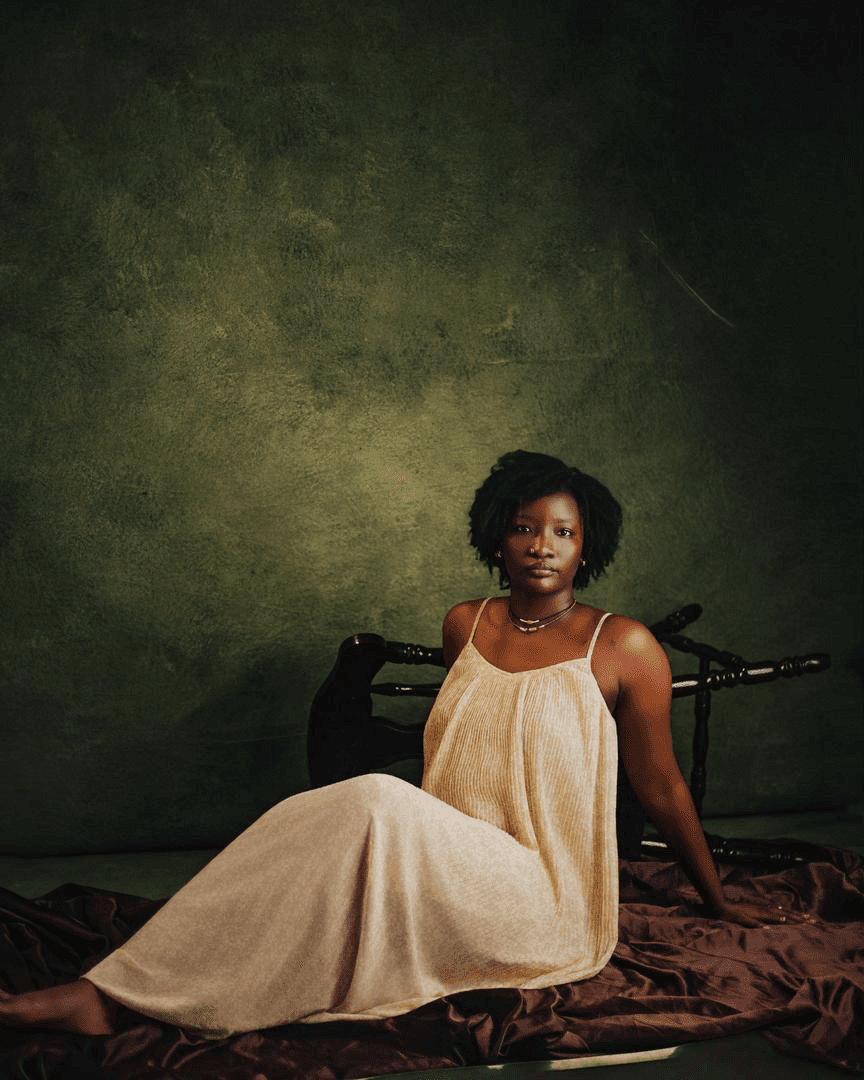
Hi there, My names are Salama Imani Adaratan and I am the founder of Her Margins, a proud feminist. Time and time again I've seen and been involved in conversations where feminists have urged other feminists to pick up books and read to have a broader perspective on women's realities and I absolutely agree, I have more nuanced and informed conversations with other feminists simply because I read. As feminists it's simply not enough that we talk, while that is important and vital there is more work to be done, if we want our voices to be heard and have a lot more impact and reach we need to be able to back it up with knowledge and we can't do that effectively if we do not read. I have three main loves which are my love for women, reading and speaking that is of course excluding my cats, I decided to merge them all as one and birthed Her Margins.
Her Margins is a women's only literary society rooted in the belief that women's stories deserve to be read and discussed as honestly as possible, fiction that is centered on a woman's life end up being a woman's reality somewhere in the world, fiction isn't really fiction when it concerns women's lives. we read literary fiction, personal essays and feminist literature. women have always lived in the margins, pushed to the edges of literature, history and rooms where decisions were made that concerns us, without us. Women's lives in every corner of the world has never been peripheral. We have always and will always be the entire story. This is a literary society that centres the experiences,voices and interior worlds of women across cultures, across borders and across every life that has been written as a footnote.
Each month we read a book from a part of the world where women have been at a grave disadvantage either in the past or present and have intentional conversations surrounding the lives of women in that part of the world. Our sittings are very intentional and shouldn't be taken with levity as we would be having difficult and heavy conversations.
Her Margins is a safe society open and accepting of cisgender women, transgender women and non binary people who relate to womanhood including lesbians, bisexual and queer women. In history queer women have been central to the feminism movement but were minimized in mainstream histories such as the Combahee river collective (1974-1980), a black lesbian feminist group that produced one of the influential documents in feminist history that insisted that race, gender,class and sexuality shouldn't be separated in fighting oppression which in turn birthed intersectional feminism.
“We are not all free till we are all free.”
Read closely, Salama Imani Adaratan
Leave your email and we'll send the next title, dates, and seat link the moment a sitting opens.